New Construction Plumber and Plumbing Services in Spearfish, SD
Plumbing for more than 50 new homes across the northern Black Hills, from the first trench to the last faucet.
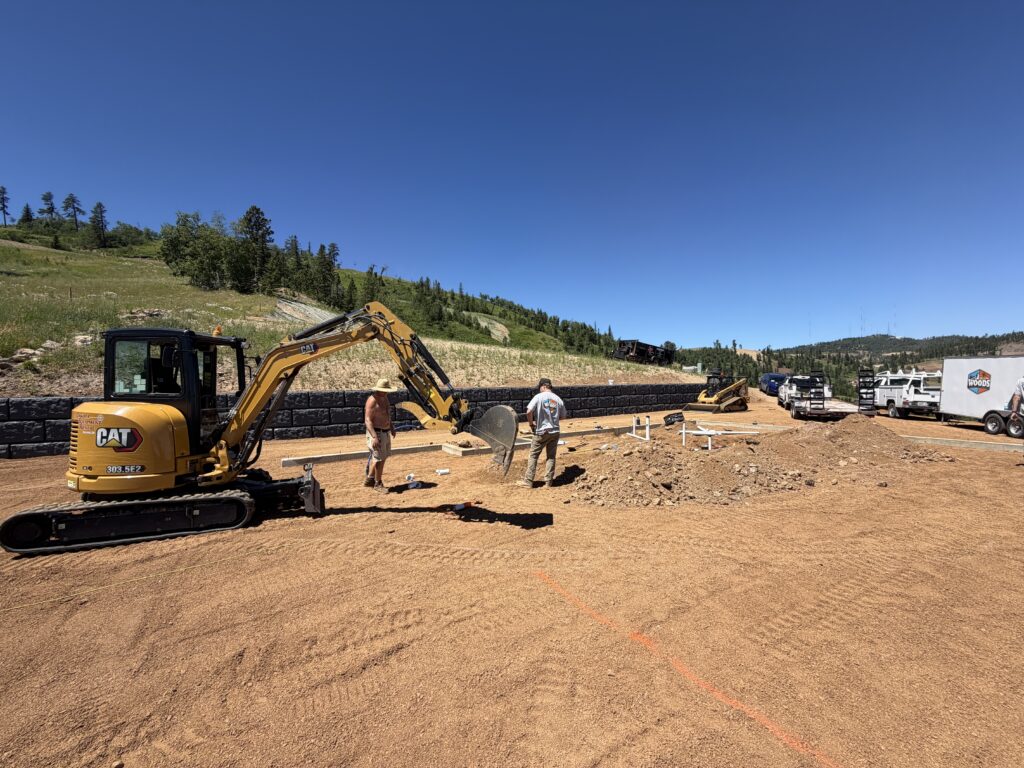
Woods Heating and Cooling is a licensed new construction plumber and HVAC contractor based in Spearfish, South Dakota. Our crew has plumbed more than 50 new homes in the Black Hills, from Spearfish subdivisions to mountain lots in Deer Mountain Village near Lead.
New construction plumbing is not one job. It is three or four visits spread across months of building, each one timed around excavation, concrete, framing and drywall. We handle every stage, and because we also provide new construction HVAC services and radiant floor heating, builders can hand the full mechanical package to one crew.
The Stages of New Construction Plumbing
How Plumbing Fits Into a New Home Build
Plumbing on a new home happens in five stages, each timed to a different point in construction. Missing a window, like a drain line that isn’t in before the slab is poured, means cutting concrete or opening finished walls. Here is what happens at each stage and when.
Stage | When in the build | What gets done |
|---|---|---|
1. Plan review | Before ground breaks | Pipe sizing, fixture layout, water and sewer source, permits |
2. Underground rough-in | After footings, before the slab pour | Drain lines, floor drains, water service entry, test and inspection |
3. Top-out rough-in | After framing and roof, before insulation | Drain and vent stacks, supply lines, valves, tubs, test and inspection |
4. Trim and finish | After drywall, cabinets and countertops | Fixtures, faucets, water heater, appliance hookups |
5. Final and handoff | Before move-in | Final inspection, startup, owner walkthrough |
Stage 1: Plan Review and Pre-Construction
Good plumbing starts on paper. We review your plans to size drain and supply lines, confirm fixture locations and choose the water heater that fits the home. We also confirm where water and sewer come from: a city tap, or a private well and septic system on rural lots.
Because Woods also designs the heating and cooling system for your new home, we map ductwork and piping together at this stage. That keeps pipes and ducts from competing for the same joist bays later. We then handle plumbing permits for the job.
Stage 2: Underground Rough-In
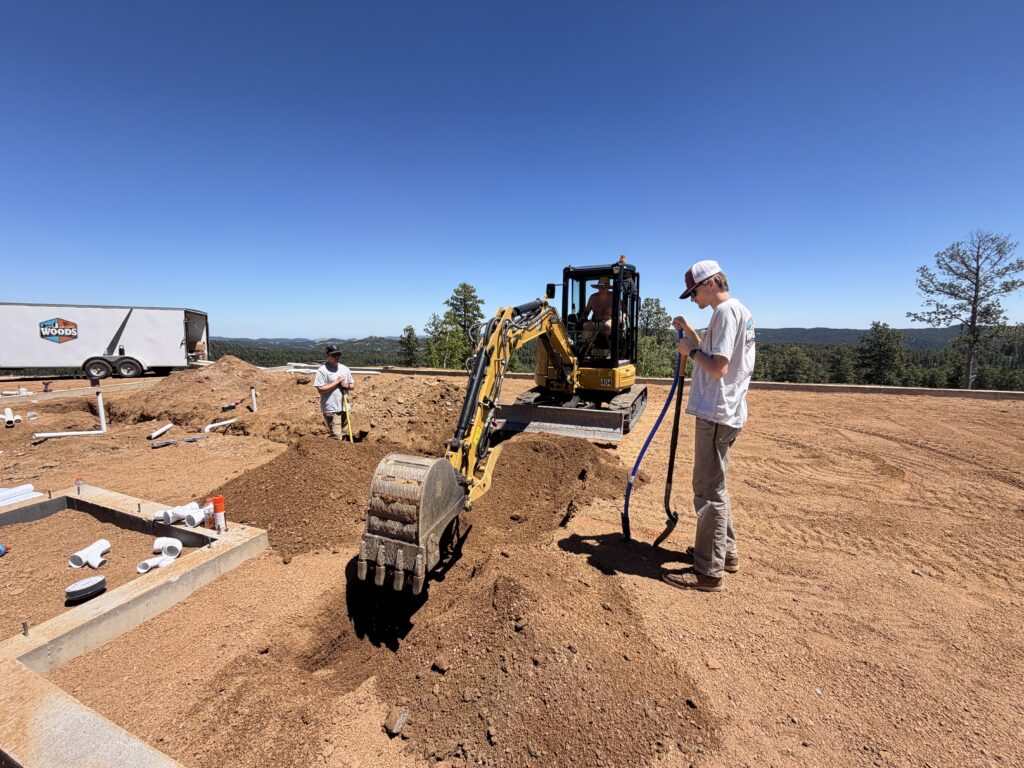
Underground rough-in, also called under-slab or groundwork plumbing, happens after the footings and foundation walls are in and before the basement or garage slab is poured. It is the stage you can never easily redo.
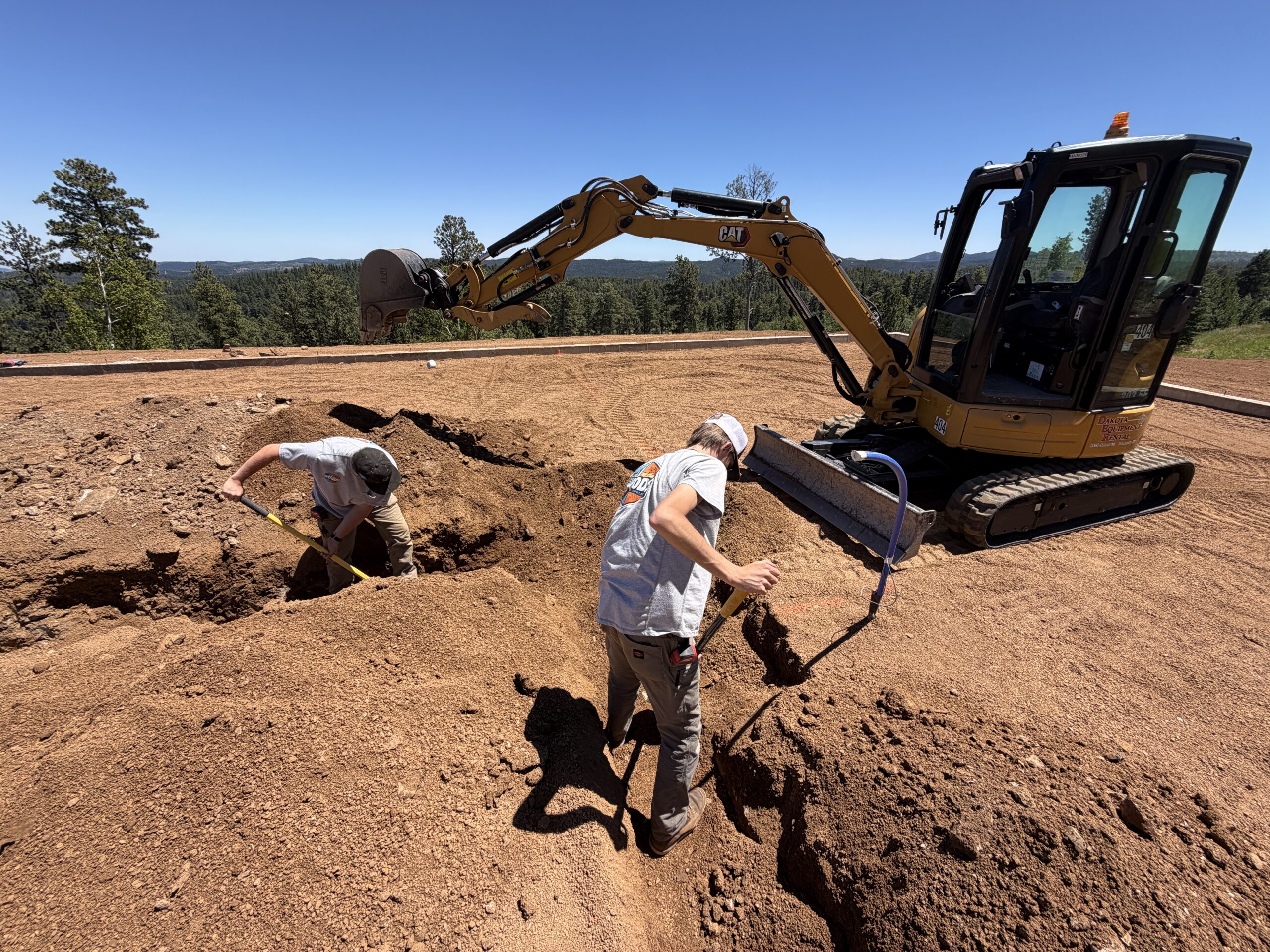
We trench and lay the building drain and any lines for basement bathrooms, floor drains and laundry, each set at the correct slope so waste flows by gravity. We also bring in the water service line and place a sump or sewage ejector pit where a basement sits below the sewer line.
Before anything is buried, the system is tested for leaks and inspected. Only then do we backfill and hand the site back for the concrete crew. If the home has radiant floor heat, our team lays that tubing before the pour as well.
Stage 3: Top-Out Rough-In
Top-out happens once the home is framed, roofed and dried in, and before insulation and drywall. This is where most of the home’s plumbing goes in.
- Drain, waste and vent (DWV) piping: stacks run up through the walls and vent through the roof so drains flow freely and sewer gas stays out.
- Water supply lines: hot and cold lines run to every fixture, appliance and outdoor hydrant.
- Valves and fixtures set early: shower valves, tubs and shower bases go in now, because they are built into the walls.
- Gas lines: piping to the furnace, water heater, range and fireplace.
The drain and supply systems are pressure tested, then inspected. Insulation and drywall can’t start until this inspection passes, so we schedule it to keep your builder moving.
Stage 4: Trim and Finish
Trim-out comes after drywall, paint, cabinets and countertops. We install and connect what the homeowner will see and use every day: toilets, sinks, faucets, shower and tub trim, the water heater, dishwasher and refrigerator water lines, the washer box, disposal and frost-free outdoor hydrants.
Stage 5: Final Inspection and Handoff
We start up the water heater, flush the lines, check every fixture for leaks and proper flow, and pass final inspection. Then we walk the homeowner through shutoff valves and the water heater, and they keep a local plumber’s number for any service the home needs later.
Plumbing a New Home in the Black Hills
Plumbing a house in the northern Black Hills is different from plumbing one on flat ground in a mild climate. After 50+ homes here, these are the conditions we plan for on every build.
Deep frost and hard winters. Water service lines are buried below the local frost line, and we keep supply piping out of exterior walls wherever the layout allows. Outdoor hydrants are frost-free models that drain back inside the wall when shut off.
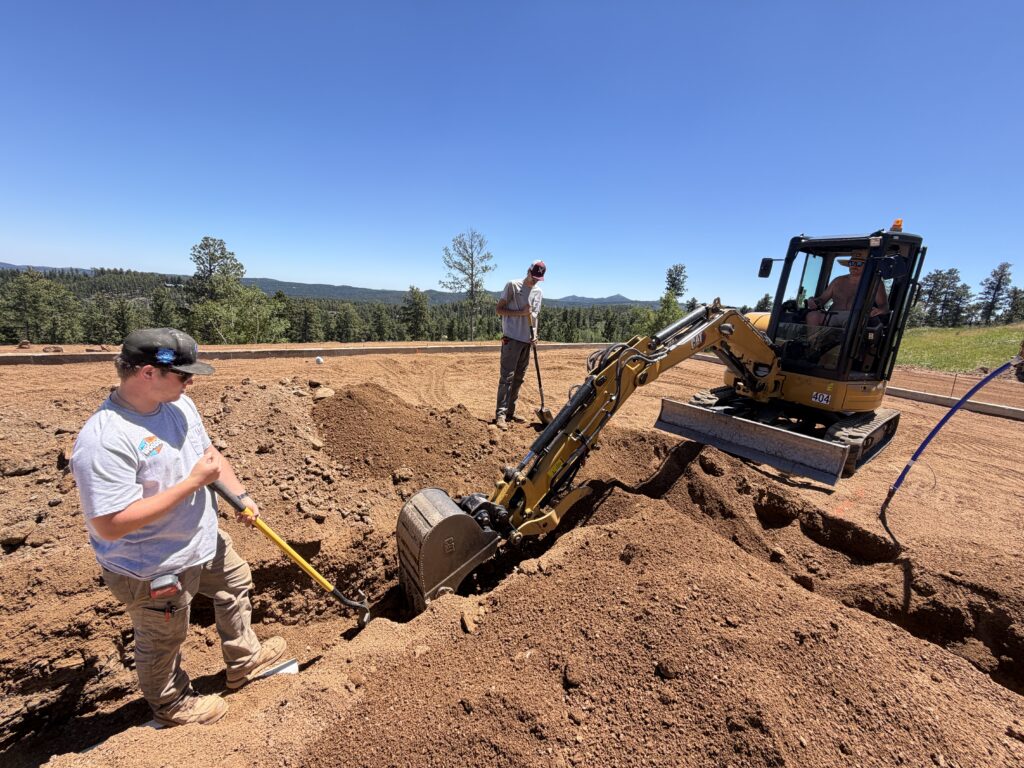
Rock and steep lots. Mountain lots near Lead, Deadwood and Spearfish Canyon often mean trenching through rock and working around big grade changes. Where a basement sits below the sewer main or septic line, we install a sewage ejector so waste can be pumped up to it.
Wells and septic systems. Many rural lots have no city water or sewer. We plumb the home to connect with the private well and the septic system, coordinating with the well driller and septic installer so the connections land where they should.
Water quality. Hard water is common in many Black Hills water sources. We can rough in a water softener or filtration loop during construction, which costs far less than adding one after the walls are closed.
Water pressure on hillsides. Elevation changes affect pressure. Homes low on a city water line can see pressure high enough to wear out fixtures and water heaters, so we install a pressure-reducing valve where it’s needed.
Why Builders Choose Woods as Their New Construction Plumber
- 50+ new homes plumbed in the Black Hills. We know local lots, local inspectors and how builders here run a job.
- One crew for plumbing, HVAC and radiant heat. One bid, one schedule and one company responsible for every pipe and duct in the walls.
- Inspections that don’t hold up the job. We test our work before calling for inspection and schedule around your framers, concrete crew and drywallers.
- Licensed and local. Licensed in South Dakota, and based in Spearfish, so we’re nearby when you need us and still here years after closing.
Who We Work With
We provide new construction plumbing services for custom home builders, developers building in subdivisions and owner-builders managing their own projects. Whether you’re building one house or several, we can bid directly from your plans.
Where We Serve
We plumb new construction throughout the northern Black Hills, including Spearfish, Lead, Deadwood, Deer Mountain Village, Belle Fourche, Sturgis, Whitewood, Central City and St. Onge
Related New Construction Services
- New Construction HVAC Services: ductwork, furnaces, air conditioning and controls, designed alongside your plumbing so pipes and ducts never compete for space.
- Radiant Floor Heating: tubing laid before the slab is poured, by the same crew that roughs in your plumbing.
New Construction Plumbing FAQ
What does a new construction plumber do? A new construction plumber installs all of the plumbing in a home being built, from drain lines under the slab to fixtures at move-in. The work happens in stages around excavation, framing and drywall, and each stage is tested and inspected before the next trade moves in.
What are the stages of new construction plumbing? New construction plumbing has five stages: plan review, underground rough-in before the slab is poured, top-out rough-in after framing, trim and finish after drywall, and final inspection. Each stage is timed to a different point in the build.
When does the plumber start on a new house? The plumber’s first on-site work is the underground rough-in, after the footings and foundation are in and before the basement or garage slab is poured. Plan review happens earlier, ideally before the home is permitted.
What is the difference between underground rough-in and top-out? Underground rough-in places drain and water lines below the concrete slab before it is poured. Top-out comes after framing and installs the drain, vent and supply piping inside the walls, floors and ceilings before insulation and drywall.
How long does plumbing take on a new home? Plumbing is spread over the months a home is under construction, but on-site work happens in short visits at each stage. On a typical home, each stage takes a few days, but timing depends on the size of the home and the number of fixtures.
How much does new construction plumbing cost? Cost depends on the number of bathrooms and fixtures, the length of water and sewer runs, and site conditions like rock or a well and septic system. Woods Heating and Cooling provides bids directly from your building plans. Call 605-861-9592 to request one.
Do you plumb new homes on wells and septic systems? Yes. Many lots in the Black Hills rely on a private well and septic system, and we plumb homes to connect with both, coordinating with the well driller and septic installer.
Can one company handle plumbing and HVAC on a new build? Yes. Woods Heating and Cooling handles plumbing, heating, cooling and radiant floor heat on new construction. One crew means one schedule and no conflicts between pipes and ductwork.
Building in the Black Hills? Get your plumbing bid.
Send us your plans and we’ll price the plumbing, or the full plumbing and HVAC package, for your build. Call 605-861-9592 or request a bid online.